

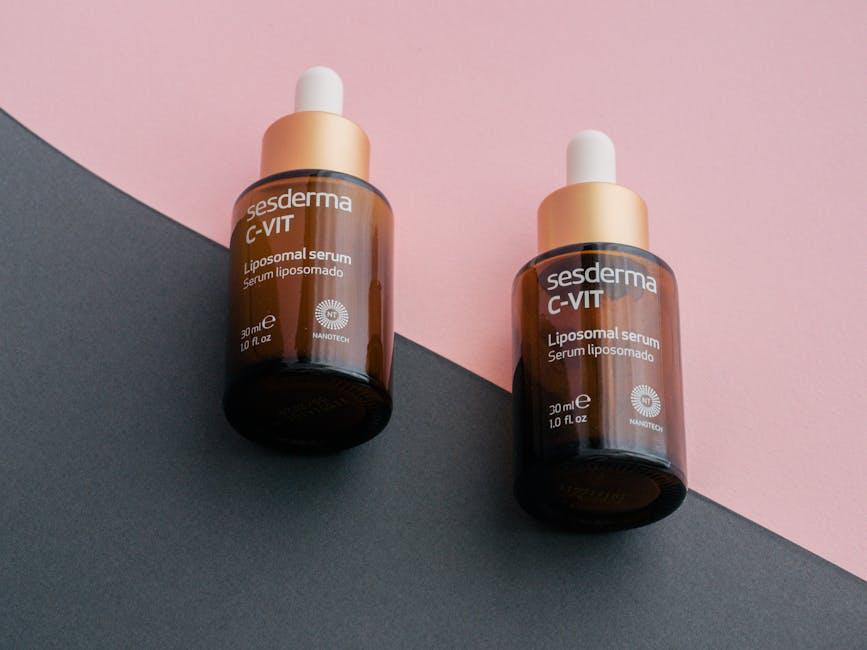
If your skincare shelf looks like a mini lab these days, you’re not imagining things. From featherlight sunscreens to serums that promise deep delivery, nanotechnology has quietly slipped into modern kozmetika-and it’s changing how our favorite formulas feel and perform. Think of it as tiny tech doing big jobs: shrinking ingredients so they absorb better, stay stable longer, and give that glow with less grease and more grace.
But “nano” can sound a little sci‑fi, and with the buzz comes questions. What exactly are nanoemulsions and liposomes? Are mineral sunscreens with nano zinc actually safer or just smoother? Do smaller particles mean bigger results-or bigger risks?
In Tiny Tech, Big Glow, we’ll unpack the science without the jargon. You’ll learn:
– Where nanotech shows up in everyday products (from SPF to Vitamin C serums)
– What benefits are real versus hype
– How safety is assessed and what regulators say
– How to read labels and shop smart if you’re curious-or cautious
Grab your moisturizer and your curiosity. By the end, you’ll know when to say “yes” to the nano advantage-and when to stick with the classics.
Table of Contents
- Nanoliposomes nanoemulsions and solid lipid nanoparticles how they boost absorption stability and glow
- Smart picks to try nano zinc oxide under 100 nm encapsulated retinol at 0.1 to 0.3 percent and stable vitamin C esters
- Decode the label EU nano brackets particle size claims and dispersion type to confirm efficacy and safety
- Safe use playbook patch test first layer after toner pair with SPF 30 plus and avoid sprays on compromised skin
- In Conclusion
Nanoliposomes nanoemulsions and solid lipid nanoparticles how they boost absorption stability and glow
Think micro, glow macro: these ultra-small carriers act like VIP shuttles for your actives. Nanoliposomes are tiny, skin-friendly lipid bubbles with an affinity for the outer barrier; they help ferry ingredients into the upper layers while keeping them comfy and cushioned. Nanoemulsions are ultra-fine oil-in-water droplets that spread like silk, delivering oil-soluble goodies without the heaviness. Solid lipid nanoparticles (SLN) use a solid, buttery core that softens at skin temperature, releasing actives gradually and shielding them from light, oxygen, and heat. The result is lighter textures, steadier performance, and a finish that looks lit from within-no greasiness, no pilling, just seamless slip and payoff.
- Absorption boost: Smaller droplet/particle sizes increase surface contact, helping actives reach the stratum corneum more efficiently for visible payoff.
- Stability shield: Bilayers and solid cores protect sensitive players (think vitamin C, retinoids, peptides) from early breakdown.
- Sensory upgrade: Featherweight, fast-absorbing textures with less tack and better spread; makeup layers smoother on top.
- Timed delivery: Controlled release can sustain benefits and help minimize irritation potential from potent ingredients.
- Glow factor: Even film formation + better hydration = smoother light reflection and a soft-focus radiance.
- Formulation finesse: Solubilizes tricky actives and reduces separation, keeping serums clear and creams uniform.
How to spot it on labels: look for cues like “liposome,” “nanoemulsion,” “SLN,” “nanocapsule,” or ingredients such as phospholipids, lecithin, glyceryl behenate, and cetyl palmitate. Pro tip: apply to slightly damp skin and seal with a moisturizer to amplify the dewy, glassy finish these tiny tech carriers were born to deliver.
Smart picks to try nano zinc oxide under 100 nm encapsulated retinol at 0.1 to 0.3 percent and stable vitamin C esters
Lean into featherweight filters and slow-release actives that do the heavy lifting without the drama. Look for sunscreens that use nano zinc oxide dispersions for broad-spectrum defense with a soft, non-chalky finish, pair night care with encapsulated retinol around 0.1-0.3% for steady resurfacing, and brighten mornings with stable vitamin C esters that won’t brown or sting. The magic combo: transparency, time-release delivery, and oxidative stability-so your glow shows up while your barrier stays chill.
- Nano zinc oxide: Choose silicone- or silica-coated dispersions labeled “broad-spectrum” for high UVA coverage and less white cast; sheer fluids and gels layer best over skincare.
- Encapsulated retinol (0.1-0.3%): Seek polymer or lipid encapsulation, fragrance-free bases, and add a ceramide-rich buffer; start 2-3 nights weekly and step up as tolerated.
- Vitamin C esters: Try THD ascorbate or ascorbyl tetraisopalmitate for glow in dry or mature skin, or sodium ascorbyl phosphate for breakout-prone types; keep in opaque, airtight packaging.
- Mixing made easy: AM = cleanser → C ester → lightweight moisturizer → zinc oxide SPF. PM = gentle cleanse → encapsulated retinol → moisturizer. Skip strong acids on retinol nights and patch test first.
A few pro cues: pick SPF for your lifestyle (fluid for daily desk-to-dash, stick for reapplication), keep textures compatible (water-light serums under gel or milk sunscreens), and watch for gentle support players like niacinamide, panthenol, and cholesterol to maintain bounce. Daily SPF is non-negotiable when using retinoids; if your skin runs sensitive, rotate C ester in the morning and retinol every other night until you’re in the clear. Smart layers, calm skin, brighter days.
Decode the label EU nano brackets particle size claims and dispersion type to confirm efficacy and safety
Give your INCI a quick audit: when you see an ingredient followed by [nano] in square brackets, that’s the EU’s way of flagging a nanomaterial. Cross-check any particle size notes on the pack or brand page-phrases like “primary particle 20-100 nm,” “D50 ≈ 60 nm,” or mentions of aggregation/agglomeration all hint at how the particles behave. For mineral UV filters, Titanium Dioxide [nano] and Zinc Oxide [nano] must be clearly declared when used in nano form, and sprays or powders that could be inhaled are a red flag. Coatings matter too: a note like “alumina/silica/stearic acid coated” tells you the brand has tuned stability and photoreactivity-good for both performance and peace of mind.
- Look for [nano] directly after the ingredient name (e.g., Titanium Dioxide [nano]).
- Size specifics such as “20-100 nm” or distribution metrics like D50/D90 suggest thorough testing and transparency.
- Surface treatments listed (e.g., alumina, silica, stearic acid) indicate safer, more stable particles.
- Safety cues: avoid aerosol/powder formats with nano minerals; check for usage restrictions or “no inhalation” notes.
- Extra credit: references to SCCS opinions or tech dossiers show the brand did its homework.
Now skim for the dispersion type-that’s beauty-speak for how the tiny tech is carried and released. A nanoemulsion often means quick feel and enhanced solubilization for actives; liposomes/nanoliposomes prioritize moisturization and targeted delivery; SLN/NLC (solid lipid carriers) tend to drip-feed actives for longer wear; a pigment or filter suspension points to even spread and lower white cast. Match the claim to the format: brightening in a nanoemulsion, soothing in liposomes, long-wear control via SLN/NLC. For sunscreens, marry this with SPF + UVA markings to ensure coverage while the nano format optimizes texture and consistency.
- Nanoemulsion: ultrafine oil/water droplets (often 20-200 nm) for clarity, glide, and better active solubility.
- Liposome/Nanoliposome: phospholipid vesicles that cocoon actives; great for hydration and gentle delivery.
- SLN/NLC: solid lipid systems for sustained release, smoother finish, and improved stability of sensitive actives.
- Suspension (inorganic UV filters): uniform dispersion minimizes white cast; check for [nano] tag and no-spray usage.
- “Non-nano” claims vary by brand; the EU’s binding cue is the actual [nano] label plus size data.
Safe use playbook patch test first layer after toner pair with SPF 30 plus and avoid sprays on compromised skin
Nanocapsules and nanoemulsions deliver actives with precision, but that same efficiency means you should introduce them mindfully. Start small: conduct a patch test on a discreet area for 24-48 hours before full-face use. Apply your nano-serum as the first treatment layer after toner-light, even, and on slightly damp skin to maximize glide and minimize tugging. If your toner is acidic, give it a brief set time so pH doesn’t spike absorption too fast. Opt for fragrance-lite formulas and support the barrier with ceramides, panthenol, and squalane while you assess tolerance.
- Patch test smart: Jawline or behind ear, pea-sized amount, wait and monitor for redness, stinging, or heat.
- Thin wins: One pump or 2-3 drops; over-layering defeats precision delivery and can overwhelm skin.
- Timing matters: Let toner go from dewy to slightly tacky before applying; pause 60-90 seconds between layers.
Sun care is non-negotiable with nano-actives: finish your morning routine with a broad-spectrum SPF 30+ to shield freshly optimized skin from UV stress. Reapply as needed, and skip aerosol mists when skin is irritated, sensitized, or post-procedure-propellants and fine droplets can sting and spread unevenly. Choose creams, gels, or pump lotions for controlled application, and keep tools clean to avoid introducing microbes onto receptive skin.
- SPF 30+ daily: Layer after moisturizer (or directly after nano-serum if it’s hydrating enough), two-finger rule for face/neck.
- Avoid sprays on compromised skin: Reach for pump or tube formats; dab, don’t drag, over hot spots.
- Go slow with actives: Space potent combos (e.g., retinoids with nano-acids) on alternate nights to reduce overload.
- Watch feedback: Tightness, flaking, or persistent flush? Scale back frequency and boost barrier support.
In Conclusion
As we wrap up Tiny Tech, Big Glow, one thing’s clear: nanotech isn’t just buzz-when used thoughtfully, it can help formulas feel better, work smarter, and stay stable longer. From silky sunscreens to serums that actually reach where they’re meant to go, these microscopic helpers are quietly reshaping our routines.
A few smart takeaways before you hit “checkout”:
– Scan for clues like liposomes, nanoemulsions, or solid lipid nanoparticles-these usually signal targeted delivery or lighter textures.
– Stick with brands that share testing and safety data, and always patch test first.
– Remember that SPF is a nonnegotiable; nano-sized mineral filters can boost wearability without the white cast.
Like any innovation, there’s more to learn-especially about long-term use and environmental impact. Keep a curious eye, listen to your skin, and check in with a dermatologist if you’re navigating sensitivities.
Got questions about a specific ingredient or product on your shelf? Drop them in the comments-I love digging into labels with you. If you enjoyed this deep dive, subscribe for more science-made-simple beauty guides. Here’s to tiny tech and your biggest glow yet.