
You have a formula you like, a bottle picked out and a label draft. Before the first sale, the EU expects a few documents and one online notification to exist. For a small brand these terms (Responsible Person, CPSR, PIF, CPNP) often sound more complicated than the work really is.
This guide explains the order of the steps and what each one means in practice. It is general information about Regulation (EC) No 1223/2009. Details change and depend on your product, so confirm anything specific with a qualified safety assessor or your national authority.
The short version: five things that must exist before you sell
- A Responsible Person established in the EU.
- A cosmetic product safety report (CPSR) for each product.
- A product information file (PIF) kept ready for authorities.
- A CPNP notification made before the product goes on the market.
- A compliant label on the container and outer packaging.
The order matters. The safety report needs the final formula and the final packaging information, and the notification needs data from both. Doing them in the wrong order usually means redoing work.
Step 1: Name your Responsible Person
Every cosmetic placed on the EU market needs a Responsible Person (RP). This is a legal or natural person established in the EU who takes responsibility for compliance. The RP is not a formality. They answer to authorities if something is wrong with the product.
Who can be the RP depends on your setup:
- You make it yourself in the EU: the manufacturer is normally the RP, unless you formally designate someone else in writing.
- A contract manufacturer makes it for you: you or the manufacturer can be the RP. Agree this in writing and make sure the named RP really has access to the documentation.
- You are outside the EU: you need an EU-based RP. An importer or a specialist compliance service can take the role.
If someone else is your RP, ask what they require from you and what they charge for taking the liability. A good RP will want to see the safety report and the PIF before agreeing, and that is a good sign, not an obstacle.
Step 2: Get the safety assessment (CPSR)
The CPSR is written by a qualified safety assessor, not by you. The assessor reviews your formula, the ingredients and their specifications, the intended use, the target consumer, the stability data and the packaging, then reaches a conclusion on safety. The report has two parts: the safety information and the assessor’s reasoning and conclusion.
To make this fast and cheap, prepare these before you contact an assessor:
- The full formula with INCI names and the percentage of every ingredient, including preservatives and fragrance or essential oils.
- Supplier specifications and safety data for each raw material.
- A description of how the product is made and under which hygiene rules.
- Stability and compatibility information, including the container you will use.
- The intended use: face, hair, beard, body, leave-on or rinse-off, and any age group you exclude.
- Your draft label and claims.
Essential oil blends and oil serums look simple, but they can still need careful assessment. Allergenic fragrance components in essential oils, for example, affect both the safety conclusion and the label. Your assessor will flag the details.
Why packaging belongs in the safety file
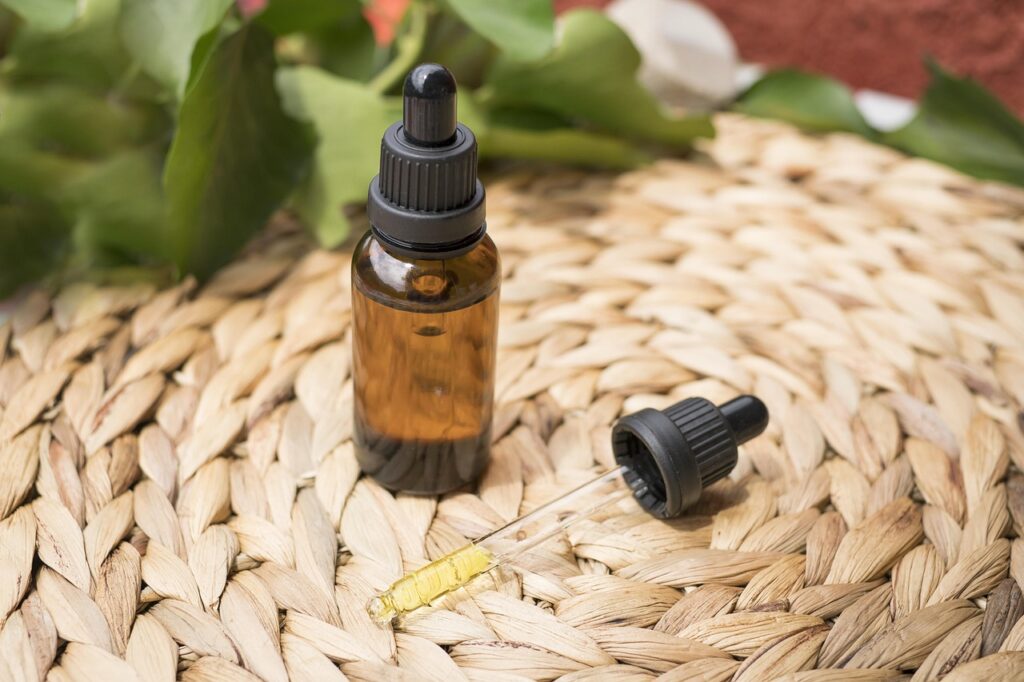
The assessor needs to know what your formula touches. For a dropper bottle that means amber glass, the pipette, the teat or bulb and the collar. Oils and essential oils can act on rubber over time, so say clearly which components you use and keep the supplier’s technical information on file. Choose the bottle and dropper before the assessment, not after. If you swap the teat later, tell your assessor.
Step 3: Build the product information file (PIF)
The PIF is the folder of evidence behind each product. Under the Regulation it generally contains:
- A product description that links the file to the product.
- The CPSR.
- A description of the manufacturing method and a statement on good manufacturing practice.
- Proof of any claimed effect, where the nature of the product or claim requires it.
- Data on animal testing, where relevant to the product’s ingredients and the rules on testing.
The PIF must be kept at the RP’s address and available to authorities on request. The Regulation sets a retention period that runs from the date the last batch was placed on the market; check the current figure with your assessor. Keep it in digital form with batch records, and make it easy to retrieve, because an authority may ask for it with little notice.
Step 4: Notify the product in CPNP
CPNP is the EU’s Cosmetic Products Notification Portal. The RP submits a notification for each product before it is placed on the market. Authorities and poison centres use the data, and it is not a product approval. Nobody checks your formula before you sell.
The notification typically asks for:
- The product category and name, and the RP’s details.
- The country of origin, if imported.
- The Member State where the product is first placed on the market and a contact person.
- The presence of nanomaterials and of substances classified as CMR, where applicable.
- The formulation, either exact or as a frame formulation.
- The original label and a photo of the packaging.
Make sure the label and photo you upload match what you will actually sell. A last-minute change of bottle colour or collar is fine, but a changed claim or ingredient list means you should update the notification and check the safety report still applies.
Step 5: Check the label and claims
The Regulation lists what must appear on the container and outer packaging: the RP’s name and address, country of origin for imports, nominal content, durability (a best-before date or period-after-opening symbol), batch number, precautions, function where not clear from the presentation, and the ingredient list. Small containers have special options, such as placing some information on an outer carton or an attached leaflet. Our face serum label checklist for small dropper bottles goes through this for 5 to 30 ml formats.
Claims are a separate subject. They must be truthful, supported and not misleading, and you cannot present a cosmetic as treating or preventing disease. Words like “heals”, “cures” or “anti-inflammatory” are where small brands get into trouble. Write claims you can support with the evidence in your PIF, and ask your assessor to review the wording.
Where packaging choices touch compliance
Packaging does not make a product compliant, but it affects several documents. Here are the points worth deciding early.
Bottle and dropper: keep the specification stable
If you change the bottle size or the dropper type, your label content, nominal quantity and possibly your stability data change. Pick a format and stick to it for the first batches. A 25 ml amber glass bottle with a DIN18 neck is a practical middle size for serums and oils. It leaves room for a full label and works with all the DIN18 closures below.
Tamper evidence
A visible tamper-evident ring is a sensible choice for a product sold online or through third parties. The 30 ml TE Day assembled dropper has a breakable security ring on the PP collar and comes ready assembled, so there is one fewer component to document.
Child-resistant closures
Whether a product needs a child-resistant closure depends on its composition and national and EU rules, for example for certain essential oil products, so ask your assessor. If you need one, the 10 ml Morning CRC/TE dropper combines child resistance and tamper evidence. See our comparison of tamper-evident and child-resistant closures for the difference. For CBD cosmetic oils, rules differ by country and by the source of the extract, so check the position in every market you sell to.
Dosing marks
If you describe an amount per use, such as a number of drops, test it on your own formula and keep the result in your records. Graduated glass pipettes with printed marks make usage instructions easier to verify, but they do not replace accurate label wording.
A note on packaging rules (PPWR)
The EU Packaging and Packaging Waste Regulation (PPWR) is being phased in and will affect recyclability, labelling of packaging materials and some formats. Dates and details depend on the packaging type, so check current guidance for your materials and your sales markets rather than relying on a summary. Keep your packaging specifications and supplier documents organised now and the later updates will be easier.
Common mistakes to avoid
- Selling first, notifying later. Notification comes before the product is on the market.
- Copying a competitor’s label. Their ingredients, RP and claims are not yours.
- Using a certificate as a substitute for a CPSR. Supplier certificates support the file, but they are not the safety report.
- Changing the formula without telling anyone. A new oil, fragrance or preservative may require a new assessment, label and notification update.
- Leaving the RP address off the label. It is a required label element.
- Making health claims. A cosmetic cannot treat or cure.
A practical timeline
- Fix the formula and the packaging components.
- Run stability and compatibility checks in the real bottle.
- Send the full data pack to a safety assessor.
- Finalise the label and claims with the assessor’s input.
- Complete the PIF and file it at the RP’s address.
- Submit the CPNP notification.
- Produce the first batch under documented good manufacturing practice, and start selling.
If you are still choosing components, you can request packaging samples to test fit and compatibility with your formula before you lock in the specification: https://www.kozmetika.com/free-samples/