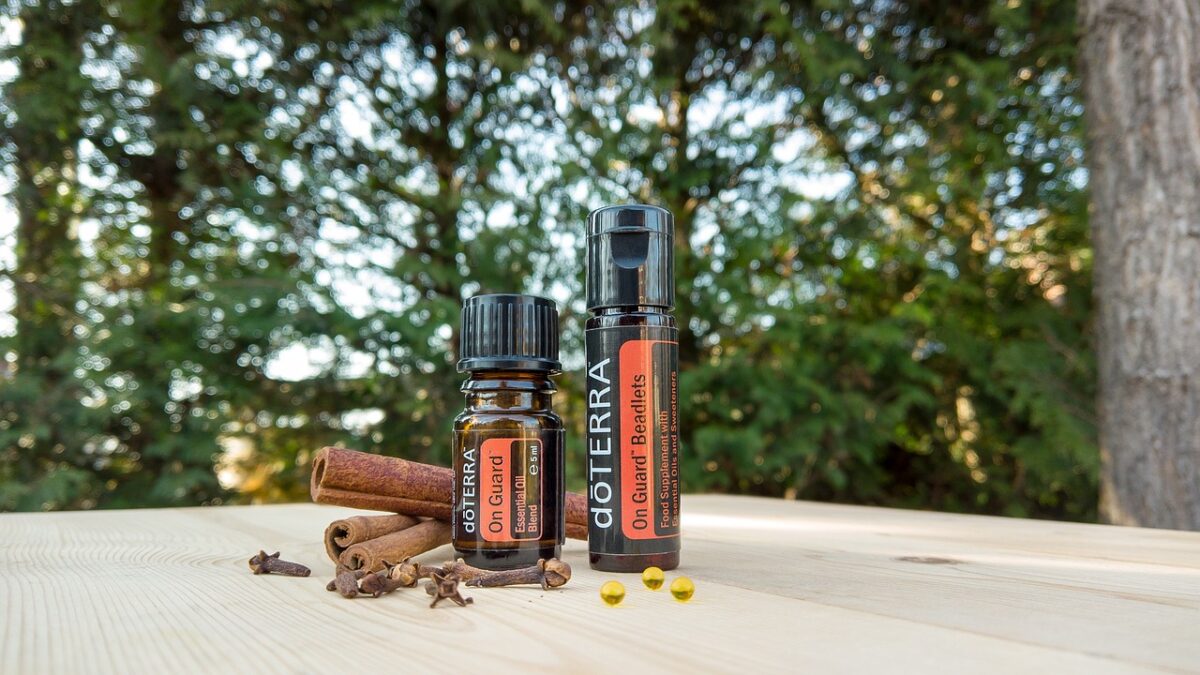
A CBD oil in an amber dropper bottle looks very much like a food supplement tincture. That is the first labelling problem. If your product is a cosmetic, the bottle, the dropper, the wording and the claims all have to say “cosmetic” and nothing else.
This guide is for brands selling CBD cosmetic oils in the EU. It covers what goes on the label, what to keep off it, and how packaging choices make the label easier or harder to get right. It is general information, not legal advice. CBD rules differ by country and by the source of the extract, so confirm your position with a cosmetic safety assessor or your national authority before printing anything.
Start with the product category, not the label
Before any design work, be sure what the product is. A cosmetic is applied to the outer body (skin, hair, nails, lips) or the teeth and mouth mucosa, mainly to clean, perfume, change appearance, protect, keep in good condition or correct body odour. This is the idea behind Regulation (EC) No 1223/2009. A product meant to be swallowed or dropped under the tongue is not a cosmetic, whatever the bottle looks like.
Several things make a regulator or marketplace read your product as something else:
- “Drops”, “tincture” or “daily dose” wording.
- Serving suggestions or a number of drops per day.
- Flavours such as mint or citrus meant for the mouth.
- Health or wellbeing promises.
Cosmetic CBD is also affected by how each country treats the extract itself, including its origin, its THC content and whether it counts as a narcotic-related substance. This varies, so do not assume that a product sold freely in one country is fine in another.
What a CBD cosmetic label normally needs
CBD oils follow the same label rules as any other cosmetic. Our face serum label checklist covers the general items in detail. In short, the Regulation expects the following, and your safety assessor can confirm the exact wording and placement:
| Label element | Practical note for CBD oils |
|---|---|
| Name and address of the Responsible Person | It must be an EU-based entity. See our guide on CPNP, Responsible Person and PIF. |
| Country of origin (imports) | Needed for products imported from outside the EU. |
| Nominal content | Weight or volume, such as 10 ml or 30 ml. |
| Date of minimum durability or PAO symbol | Depends on the stability data for your formula. |
| Batch number | Lets you trace each production run. |
| Function of the product | For example “facial oil” or “body oil”. Do not describe a health effect. |
| Precautions and warnings | As required by the safety report, including any specific warnings. |
| Ingredients list (INCI) | In descending order of weight. List the CBD ingredient under its INCI name, and take the right name and wording from your safety assessor and supplier documents. |
The carrier oil usually comes first in the ingredients list because it makes up most of the product. Hemp seed oil, MCT or jojoba are common. Do not mix up hemp seed oil with a CBD-containing extract. They are different ingredients with different INCI names, and the label should list what is actually in the bottle.
Claims: where CBD brands go wrong
Cosmetic claims must be truthful and supported, and they cannot claim to treat, cure or prevent disease. CBD marketing often drifts into exactly that territory because competitors do it. Don’t copy them.
Avoid on the bottle, the carton, your website and your social posts:
- Words about pain, anxiety, sleep, inflammation or stress.
- “Natural remedy”, “therapeutic” or “medicinal”.
- Strength numbers presented as a dose (“1000 mg” with a drop count).
- Pictures of someone taking drops by mouth.
Safe-sounding cosmetic language is about the skin: “a nourishing facial oil with a light, non-greasy feel”, provided you can support it. Your assessor can help you review wording. Remember that claims are judged across all your channels, not just the label.
On the strength figure: showing the CBD content on the front is common, but it can look like a dose. Ask your assessor whether to state it, where and how, and whether you can back it with batch analysis from your supplier. Do not print a figure you cannot document.
Making it fit on a 10 ml or 30 ml bottle
A 10 ml amber bottle gives you very little label area. The mandatory information, the INCI list and the warnings can run to a lot of text. There are several ways to handle it:
- Use a carton. Put the full information on an outer box and keep the bottle label shorter. The Regulation has provisions for cases where information cannot practically appear on the container, so ask your assessor which items must stay on the bottle.
- Choose a larger size. 30 ml gives you a surface where a readable INCI list is realistic. Our guide to choosing a dropper bottle size explains how size affects use and shelf life.
- Use a wrap or fold-out label. It adds printed area without changing the bottle.
- Keep the font readable. A legal text that nobody can read is not a good solution, and tiny type is a common reason labels get flagged.
Choose a closure that supports the cosmetic positioning
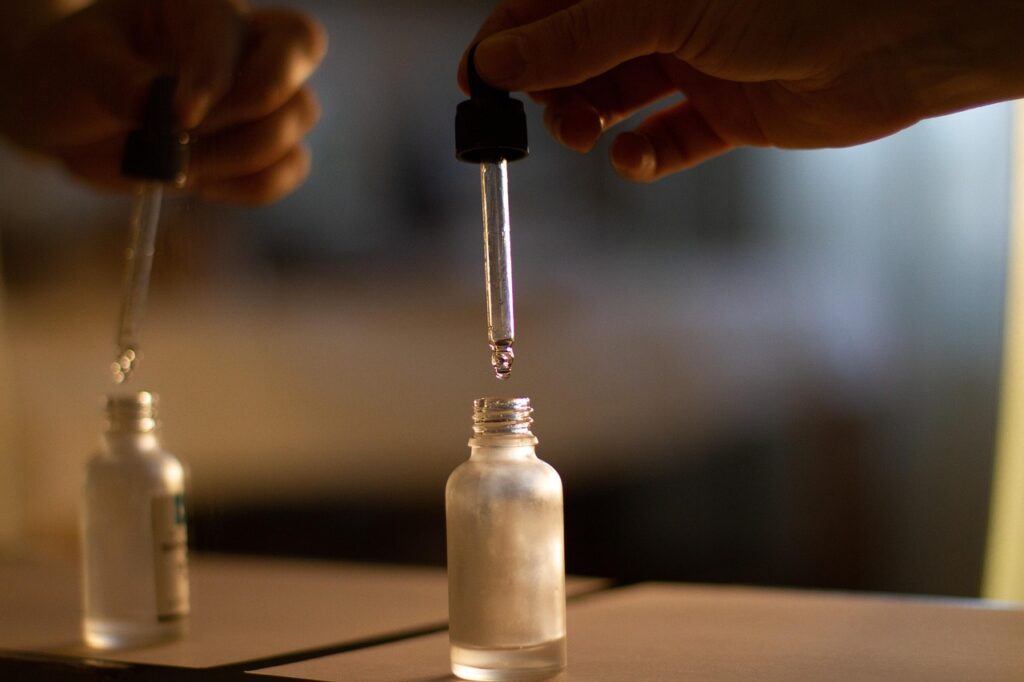
The dropper is part of how your product is perceived and used. For a CBD oil, there are two practical considerations: tamper evidence and child safety. Our article on tamper-evident vs child-resistant closures explains the difference. Whether child-resistant closures are required for your product depends on your formula and the safety assessment, so check before you choose.
Options that work well on CBD cosmetic oils:
- Night 10 ml CRC/TE assembled dropper: a child-resistant and tamper-evident collar on the smallest common size, useful if your assessment or your market calls for it.
- Day 30 ml CRC/TE assembled dropper: the same closure type for a 30 ml body or facial oil, with a white teat for lighter branding.
- Morning 30 ml TE assembled dropper: a breakable security ring shows the bottle has been opened, which reassures online buyers.
All of these fit DIN18 (GL18) bottles, so you can start with a 10 ml and move to a 20 ml or 40 ml amber bottle without changing the closure family. See the DIN18/GL18 dropper bottles for the range of sizes.
If your oil is applied to the skin in measured amounts, graduated pipettes, such as the 58 mm GraduFlow pipette for 10 ml bottles, make dosing visible. Be careful here: printed marks can suggest a dose, so use them only if they fit your cosmetic use instructions.
Why amber glass is worth the effort
CBD and many carrier oils are sensitive to light, heat and oxygen. Amber glass reduces light exposure, and a well-fitted dropper limits air contact. This protects the product during its shelf life, but it does not replace stability testing. Your durability date and PAO should come from testing or from your assessor’s judgment, not from the bottle colour.
A few practical habits help:
- Fill bottles to leave minimal headspace.
- Make sure the collar is tightened evenly. A screwing tool for droppers and caps helps if you close hundreds of bottles.
- Store sealed stock away from direct light and heat.
- Keep a retained sample of each batch.
A short pre-print checklist
- Confirm that your product is a cosmetic and that your CBD ingredient is permitted in your target countries.
- Check the CBD supplier’s documentation (analysis, origin, specification) and make sure it matches what you claim.
- Have a safety assessor complete the safety report (CPSR) and review the label text.
- Notify the product in CPNP through your Responsible Person before you place it on the market.
- Remove any claim you could not defend if challenged.
- Order a small run of printed labels and test them on real bottles before ordering large quantities.
If you want to test closures and bottle sizes before committing, you can request packaging samples at kozmetika.com/free-samples.